April 21, 2025
Think ransomware is your worst nightmare? Think again.
Hackers have discovered a new method to hold your business hostage that may be even more ruthless than encryption. This technique is known as data extortion, and it is altering the landscape of cybercrime.
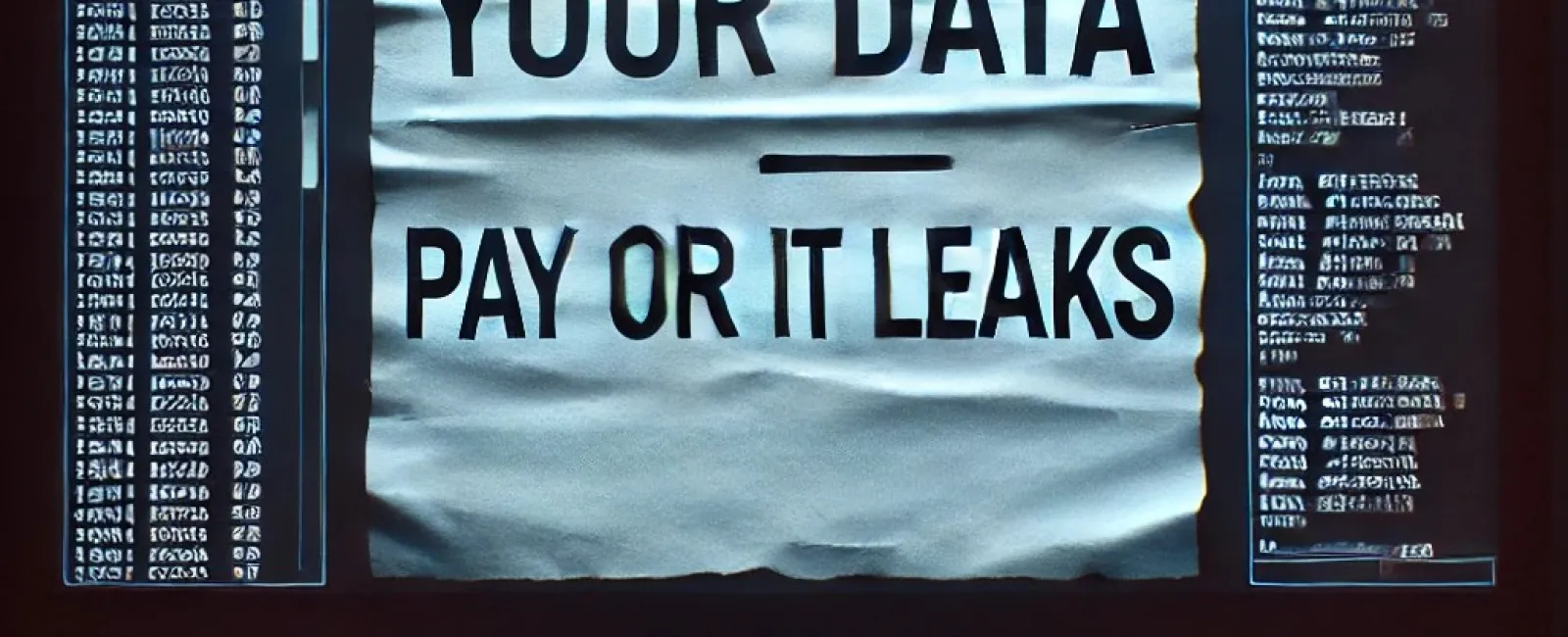
Here's the process: Instead of encrypting your files, hackers simply steal your sensitive information and threaten to leak it unless you pay. There are no decryption keys or file restoration; just the anxiety of potentially seeing your private information exposed on the dark web and dealing with a public data breach.
This tactic is rapidly gaining traction. In 2024, over 5,400 extortion-based attacks were reported globally, marking an 11% increase from the previous year. (Cyberint)
This is not merely an evolution of ransomware; it represents an entirely new form of digital hostage situation.
The Rise Of Data Extortion: No Encryption Necessary
The days of ransomware merely locking you out of your files are over. Now, hackers are skipping encryption altogether. The reason? Data extortion is quicker, simpler, and more lucrative.
Here's how it operates:
- Data Theft: Hackers infiltrate your network and stealthily steal sensitive information, including client data, employee records, financial documents, and intellectual property.
- Extortion Threats: Rather than encrypting your files, they threaten to publicly disclose the stolen information unless you comply with their demands.
- No Decryption Needed: Since there's no encryption involved, hackers don't have to provide decryption keys, allowing them to evade traditional ransomware defenses.
And they are successfully executing this strategy.
Why Data Extortion Is More Dangerous Than Encryption
When ransomware first emerged, businesses primarily feared operational disruptions. With data extortion, the risks are considerably higher.
1. Reputational Damage And Loss Of Trust
If hackers leak your client or employee data, it's not just about losing information; it's about eroding trust. Your reputation can be shattered in an instant, and rebuilding that trust may take years, if it can be done at all.
2. Regulatory Nightmares
Data breaches often lead to compliance violations. This can result in GDPR fines, HIPAA penalties, or PCI DSS infractions. When sensitive information becomes public, regulators will impose significant fines.
3. Legal Fallout
Leaked data can trigger lawsuits from clients, employees, or partners whose information has been compromised. The legal costs could be devastating for small or medium-sized businesses.
4. Endless Extortion Cycles
Unlike traditional ransomware, where paying the ransom restores access to your files, data extortion lacks a definitive endpoint. Hackers can retain copies of your data and re-extort you months or even years later.
Why Are Hackers Ditching Encryption?
Simply put: It's more convenient and lucrative.
Although ransomware attacks are still on the rise—with 5,414 reported globally in 2024, an 11% increase from the previous year (Cyberint)—extortion provides:
- Faster Attacks: Encrypting data requires time and processing power. In contrast, stealing data is quick, especially with modern tools that enable hackers to extract information discreetly without triggering alarms.
- Harder To Detect: Traditional ransomware often sets off antivirus and endpoint detection systems. Data theft, however, can be camouflaged as regular network traffic, making it much more challenging to identify.
- Increased Pressure On Victims: The threat of leaking sensitive data creates a personal and emotional impact, heightening the chances of payment. No one wants their clients' personal information or proprietary business details exposed on the dark web.
No, Traditional Defenses Aren't Enough
Conventional ransomware defenses fall short against data extortion. Why? Because they are designed to prevent data encryption, not data theft.
If you're relying solely on firewalls, antivirus software, or basic endpoint protection, you're already at a disadvantage. Hackers are now:
- Utilizing infostealers to gather login credentials, facilitating easier access to your systems.
- Exploiting vulnerabilities in cloud storage to access and extract sensitive files.
- Disguising data exfiltration as legitimate network traffic, circumventing traditional detection methods.
Moreover, the use of AI is accelerating these attacks.
How To Protect Your Business From Data Extortion
It's time to reevaluate your cybersecurity approach. Here's how to stay ahead of this escalating threat:
1. Zero Trust Security Model
Assume that every device and user could be a potential threat. Verify everything without exceptions.
- Implement strict identity and access management (IAM).
- Use multifactor authentication (MFA) for all user accounts.
- Continuously monitor and validate devices connecting to your network.
2. Advanced Threat Detection And Data Leak Prevention (DLP)
Basic antivirus solutions won't suffice. You need advanced, AI-driven monitoring tools that can:
- Detect unusual data transfers and unauthorized access attempts.
- Identify and block data exfiltration in real time.
- Monitor cloud environments for suspicious activities.
3. Encrypt Sensitive Data At Rest And In Transit
If your data is stolen but encrypted, it becomes useless to hackers.
- Utilize end-to-end encryption for all sensitive files.
- Implement secure communication protocols for data transfer.
4. Regular Backups And Disaster Recovery Planning
While backups won't prevent data theft, they will allow you to quickly restore your systems in the event of an attack.
- Use offline backups to safeguard against ransomware and data destruction.
- Regularly test your backups to ensure they function when needed.
5. Security Awareness Training For Employees
Your employees are your first line of defense. Train them to:
- Recognize phishing attempts and social engineering tactics.
- Report suspicious emails and unauthorized requests.
- Follow strict access and data-sharing protocols.
Are You Prepared For The Next Generation Of Cyberattacks?
Data extortion is here to stay and is becoming increasingly sophisticated. Hackers have discovered a new way to coerce businesses into paying ransoms, and traditional defenses are proving inadequate.
Don't wait until your data is at risk.
Start with a FREE
15-Minute Discovery Call. Our cybersecurity experts will evaluate your current
defenses, identify vulnerabilities and implement proactive measures to protect
your sensitive information from data extortion.
Click here or give us a call at 905-947-1636 to schedule your FREE 15-Minute Discovery Call today!
Cyberthreats are evolving. Isn't it time
your cybersecurity strategy evolved too?